Objects of Desire
Dante’s lighthouse, a windmill and the glass to come: Buenos Aires in stone
The Palacio Barolo’s Divine Comedy, the restored Confitería del Molino and Puerto Madero’s glass.

Photo Credit
Image courtesy of © Eugenio Hansen, OFS · CC BY-SA 4.0 via Wikimedia CommonsWhat does a building owe to a poem? On the Avenida de Mayo, a good deal. The Palacio Barolo was planned around Dante’s Divine Comedy, from its nine vaults to its lighthouse, and at the far end of the avenue the Confitería del Molino has come back from a quarter of a century in the dark. Down by the river, Puerto Madero’s glass writes the next chapter. No prices, only buildings.
A hundred metres, a hundred cantos
Luis Barolo arrived in Argentina in 1890 and prospered in farming; he hired the architect Mario Palanti to build offices for rent. Work began in 1919 and finished in 1923. What Barolo commissioned, in the building’s own telling, was a homage to Dante’s Divine Comedy, which is a great deal more than most landlords ask of a rental.
Barolo’s ambitions went further still: the building’s history records his wish to keep Dante’s ashes there. They never came, which is perhaps as well for the tenants. The practical side was modern for its day: 16,630 square metres under cover, nine lifts and two goods lifts, two of them hidden from view, and offices that are still offices today.
The plan follows the poem’s three parts, hell, purgatory and heaven. The nine access vaults stand for the nine ranks of hell, the upper floors and dome for the seven levels of purgatory, and the lighthouse on top for the nine choirs of angels. The building rises 100 metres, one for each canto, over 22 floors and two basements, and was, in its own words, the tallest in Latin America when it was built.
The lighthouse is the flourish: a rotating beacon of 300,000 candlepower, said to be visible from Uruguay. The building had its own power plant, which lets its keepers call it an early smart building, and in early June, they say, the Southern Cross lines up with its axis at 7.45pm, a punctuality few office blocks can claim. Look up in the arcade, too: its vaults carry 14 Latin quotations from nine works.
The windmill wakes up
At the other end of the avenue, on the corner of Rivadavia and Callao, the Confitería del Molino opened on 9 July 1916, for the centenary of independence, and soon became an emblem of Art Nouveau in Argentina. Its name honours the city’s first steam-powered flour mill. The owners brought furniture from Italy, bought first-class crystal and finished the rooms in marble, stained glass and bronze.

Photo Credit
Image courtesy of © Beatrice Murch from Buenos Aires, Argentina · CC BY 2.0 via Wikimedia CommonsDeclared a national historic monument in 1997, it then stood shut for about a quarter of a century before a joint restoration brought it back. It is not yet a café again, but Experiencia Molino offers guided visits without charge for small groups, with individual registration in advance on delmolino.gob.ar. A confitería without cakes is a strange thing; enjoy the plasterwork while the kitchen waits.
Barolo commissioned a homage to Dante, which is a great deal more than most landlords ask of a rental.
The river’s new skyline
Down by the river, Puerto Madero has turned the four docks of the old port into a district of converted brick warehouses, hotels and residential towers, complete and lived in. On Dique 1, Carlos Ott’s Harbour Tower, fully glazed and designed as a sculpture for the skyline, is under construction within GNV Group’s Madero Harbour district, beside the Costanera Sur reserve.

Photo Credit
Image courtesy of © Tadeo GV · CC BY-SA 4.0 via Wikimedia CommonsIts neighbour, Osten Tower, was the district’s first branded residence, born of GNV Group’s Osten restaurant, with terraced balconies that each carry a grill: the asado, in other words, has been built into the architecture. A second Osten tower adds a rooftop bar and infinity pool. Barolo built for a poet; the docks build for the weekend.
Our advice: walk the Avenida de Mayo from the Barolo to the Molino in the late afternoon, then take a taxi to the docks for dusk. A century apart, both ends of the walk ask the same thing of a building: not how tall it is, but how much it means. Dante, at least, would recognise the climb.
Why it's on our list
- A hundred metres, a hundred cantos
- The windmill wakes up
- The river’s new skyline
Location
The map comes from Google Maps, which sets its own cookies once it loads.
More in depth
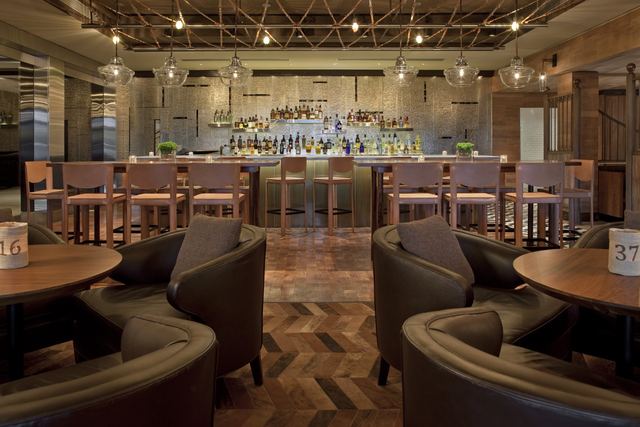 Objects of DesireSixty and ten: the Dry Martini and the bars that keep Buenos Aires upThe IBA’s Dry Martini, and the cocktail bars that pour it, from Gran Bar Danzón to Verne Club.
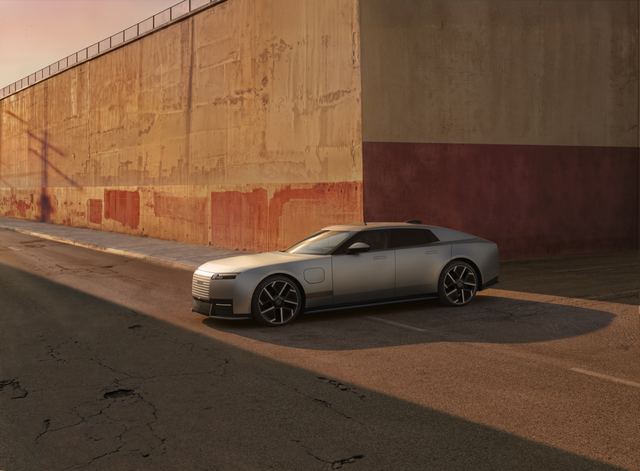 Objects of DesireLess parked than crouched: the electric Jaguar and the new supercarsJaguar’s Type 00 and Type 01, Ferrari’s first electric car and the record-breakers around them.
 Objects of DesireA horseshoe, a whale and a power station: how Buenos Aires listensThe Teatro Colón’s horseshoe, the Palacio Libertad’s Blue Whale and the Usina del Arte’s hall.