Objects of Desire
A horseshoe, a whale and a power station: how Buenos Aires listens
The Teatro Colón’s horseshoe, the Palacio Libertad’s Blue Whale and the Usina del Arte’s hall.

Photo Credit
Image courtesy of © Mauricio V. Genta · CC BY-SA 4.0 via Wikimedia CommonsWhy does a city of late dinners and loud football keep such serious rooms for listening? Because Buenos Aires has always built for the ear. An opera house that took almost 20 years and three architects, a central post office reborn as a concert hall, and an old power station in La Boca: here is how the city listens, checked against official sources in November 2026.
A horseshoe that does the work
The Teatro Colón opened on 25 May 1908 with Verdi’s Aida, after a building site that ran for almost 20 years and employed 1,500 people. It went through three architects: Francesco Tamburini drew the project but died before work began, Victor Meano was killed before the opening, and Jules Dormal saw it through. Opera houses are rarely quick; few have been this determined.
The secret is in the plan. The City’s tourism office credits the horseshoe-shaped hall with an ideal distribution of sound, and the house holds 2,478 seats, with about 500 more standing places. Under a dome of 318 square metres, it is recognised, in the tourism office’s words, as one of the most perfect theatres in the world: a claim made with the calm of a building that has heard every tenor since.
Behind the gilt is a factory. The theatre’s Colón Fábrica visit shows how its sets, costumes and wigs are made, and its guided tours take in the hall, the main foyer, the Galería de Bustos and the Salón Dorado. This season’s great test of the acoustics is a new Die Walküre, played from 29 November to 6 December 2026, with a running time of 270 minutes, intervals included. Choose a seat that suits your back.
The rest of the season tests the room from other angles: Bach’s Brandenburg Concertos on 20 November, a Steve Reich evening in the Colón Contemporáneo series on 30 November, and a recital by the soprano Asmik Grigorian on 8 December. One hall, three centuries of music, and the same horseshoe doing the work for each.
The whale in the post office
A few blocks east, the old Correo Central was designed by the French architect Norbert-Auguste Maillart; work began in 1911 and finished in 1928, and for 80 years it sorted the nation’s letters. It reopened in 2015 as a cultural centre, now the Palacio Libertad, and covers more than 100,000 square metres, which makes it less a building than a postcode.
Declared a national historic monument in 1997, it had its four façades and its interior restored from 2009. The letters have gone; the address has kept its grandeur.
A building that once made electricity now makes atmosphere, which is a fairer trade than most.
Its heart is the Ballena Azul, the Blue Whale, a symphonic hall for 1,750 listeners, with a chamber hall for 540 and six smaller auditoriums. Above is the Gran Lámpara, an exhibition space of 2,000 square metres on the sixth and seventh floors, and Julio Le Parc’s Esfera azul hangs in the entrance hall. Many events are open to all with advance reservation; check palaciolibertad.gob.ar first.

Photo Credit
Image courtesy of © B1mbo · CC BY-SA 3.0 via Wikimedia CommonsCurrent, then music
South in La Boca, the Usina del Arte was built in 1916 as a power station for the Ítalo Argentina de Electricidad company, designed by the Italian architect Juan Chiogna in a Florentine style of exposed brick. The City restored it and reopened it as an arts centre in 2012. A building that once made electricity now makes atmosphere, which is a fairer trade than most.
Its symphonic hall seats 1,200, and the City’s tourism office notes that its acoustics were designed by the same studio that restored the Teatro Colón. Wood lines the room under the old brick roof, a warm box for orchestras and chamber groups alike; the programme is published on usinadelarte.ar.
Our advice: hear the Colón first, from a seat in the hall rather than on the tour, then compare. Three rooms, three generations of ambition, and one city that will happily argue about which sounds best until well after dinner, which here is saying something.
Why it's on our list
- A horseshoe that does the work
- The whale in the post office
- Current, then music
Location
The map comes from Google Maps, which sets its own cookies once it loads.
More in depth
 Objects of DesireDante’s lighthouse, a windmill and the glass to come: Buenos Aires in stoneThe Palacio Barolo’s Divine Comedy, the restored Confitería del Molino and Puerto Madero’s glass.
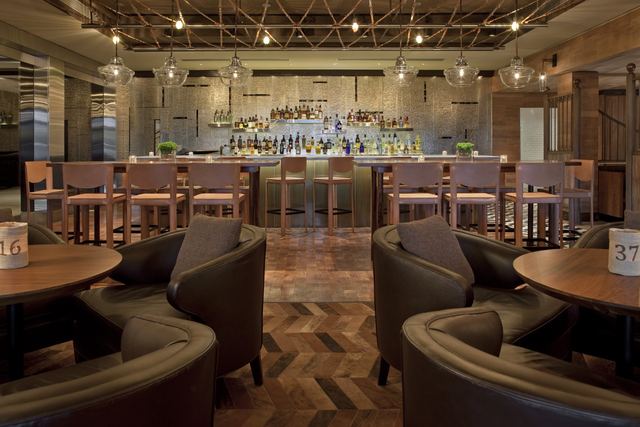 Objects of DesireSixty and ten: the Dry Martini and the bars that keep Buenos Aires upThe IBA’s Dry Martini, and the cocktail bars that pour it, from Gran Bar Danzón to Verne Club.
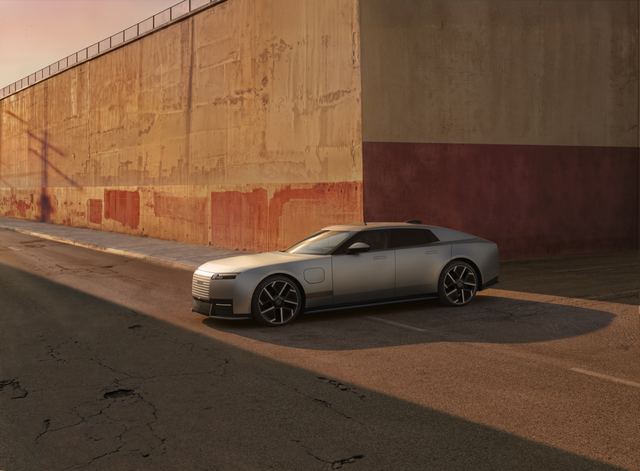 Objects of DesireLess parked than crouched: the electric Jaguar and the new supercarsJaguar’s Type 00 and Type 01, Ferrari’s first electric car and the record-breakers around them.