The back story
From the bar notable to the basement: how Buenos Aires drinks, the back story
Protected corner bars, tango houses and basement cocktail rooms: how Buenos Aires learned to drink.
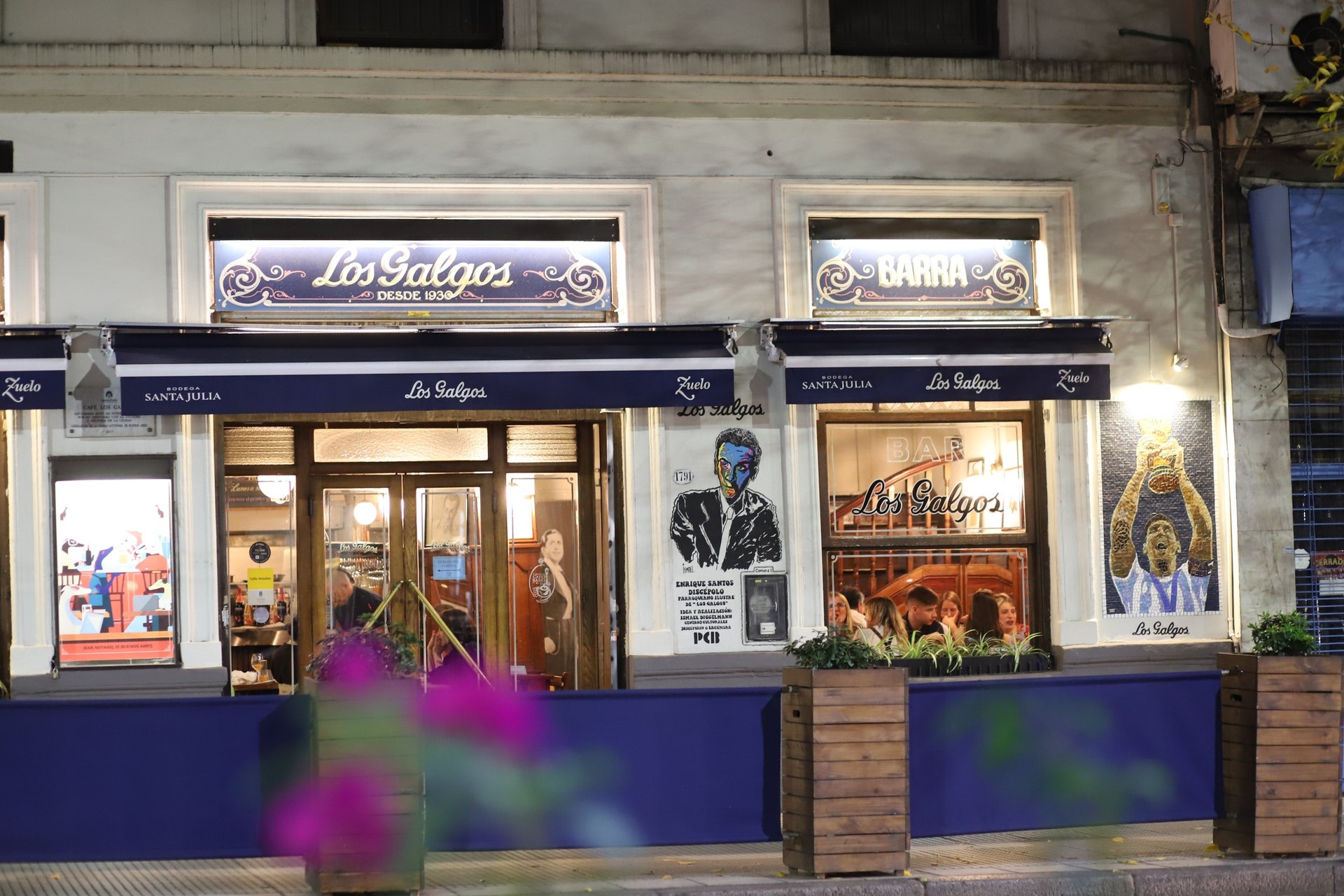
Photo Credit
Image courtesy of © Bar Los GalgosFew cities pass laws to protect their bars; Buenos Aires did so in 1998. Its old corner bars are catalogued like monuments, its tango houses serve dinner before the dancing, and since the late 1990s a new generation has taken the cocktail downstairs, behind a flower shop and up a staircase behind a red door. Why does a city that dines so late drink so well? Here is the back story.
A city that protects its bars
In 1998 the City’s Ley 35 created a commission for its notable cafés, bars, billiard halls and confiterías, and the catalogue it keeps has made heritage of the corner bar. Their value, the City says, lies in their architecture and tradition, and being a bar notable carries a duty to conserve the spirit of the place: a bar notable is the only kind of heritage where the custodians are expected to know your usual.
The City celebrates them, too. At its fifth Noche de los Bares Notables, on a Thursday in September, more than 75 bars took part. Bar Los Galgos, near the Congress, is one of the catalogue’s bars, and calls itself a bar notable of Buenos Aires on its own site; its lit front still carries the sign ‘Desde 1930’, as if anyone might doubt it.
Tango takes a table
Tango, in this city, has long come with a drink and a dinner. El Querandí, at Perú 322, has run since 1920 in the historic centre, in its own words, and its show walks through tango’s eras, from the origins and the immigrants of the outskirts to Gardel, the salons and modernism, with four couples, a quartet of piano, double bass, bandoneón and violin, and two singers.
The grander houses keep later hours. Rojo Tango plays the red cabaret of the Faena Hotel, with dinner and a show from 9.15pm, and Tango Porteño, a few steps from the Obelisco, recreates tango’s golden decade of the 1940s. Those who would rather dance than watch go to El Beso, on Riobamba, where the milonga has run every afternoon and every night, 365 days a year, since 1999.
There the invitation is a glance, not a sentence: the City lists the cabeceo, a nod across the room, among the codes of the milonga. It may be the most efficient form of flirtation ever devised, and certainly the one with the fewest witnesses.
The cocktail goes underground
The modern cocktail bar arrived upstairs. Gran Bar Danzón poured its first drinks at Libertad 1161 in 1998, created by Patricia Scheuer and Luis Morandi, and calls itself a pioneer in Buenos Aires and a school for leading figures in food, cocktails and wine. In 2013 the same team went below ground with BASA Basement Bar, a minimal room near the Plaza San Martín.

Photo Credit
Image courtesy of © Manticora87 · CC BY-SA 4.0 via Wikimedia CommonsOthers followed the instinct for concealment. Florería Atlántico, at Arroyo 872, is reached through a flower shop and down the stairs; La Puerta Roja, in San Telmo, waits behind a red door at the top of a staircase; and Verne Club, in Palermo since 2013, follows Phileas Fogg’s journey round the world on a list it changes four times a year. Milión, in Recoleta, spreads across the rooms and garden of an old house.
A bar notable is the only kind of heritage where the custodians are expected to know your usual.
Late, and by the rules
Why so late? The City’s tourism office puts dinner between 8pm and 11pm, so the first cocktail is an aperitif that can comfortably start at nine. Bars may sell alcohol until 5am, the Foreign Ministry’s visitor guide notes; drinking in the street is prohibited, and supermarkets stop selling alcohol at 10pm. The city, in short, sends you to the bar and then lets you stay.
The hours bear it out. 878, in Villa Crespo, keeps its kitchen open until 1am, or 2am from Thursday to Saturday, and Uptown, on Arévalo, opens from 8.30pm, Tuesday to Saturday, with reservations taken only by phone. The hotels keep their own court: the Alvear Roof Bar at the top of the Alvear Palace, Pony Line at the Four Seasons, and the Library Lounge at the Faena, with live music among the nightly attractions.
Our advice: start at a bar notable in the early evening, dine at nine, and leave the basement for afterwards. In Buenos Aires the night is not something to be got through; it is the main course.
Why it's on our list
- A city that protects its bars
- Tango takes a table
- The cocktail goes underground
- Late, and by the rules
Location
The map comes from Google Maps, which sets its own cookies once it loads.
More in depth
 The back storyWhere Buenos Aires sleeps: palaces, docks and garden hotelsPalaces, warehouses and garden hotels: where to stay.
 The back storyThe Paris of the south, and much more: Buenos Aires’ great sightsThe Colón, Recoleta, Plaza de Mayo, La Boca and Puerto Madero.
 The back storyBefore the avenues: colonial Buenos Aires, from the Manzana de las Luces to Parque LezamaA Jesuit church, tunnels under San Telmo and the park where the city may have begun.